
 Save
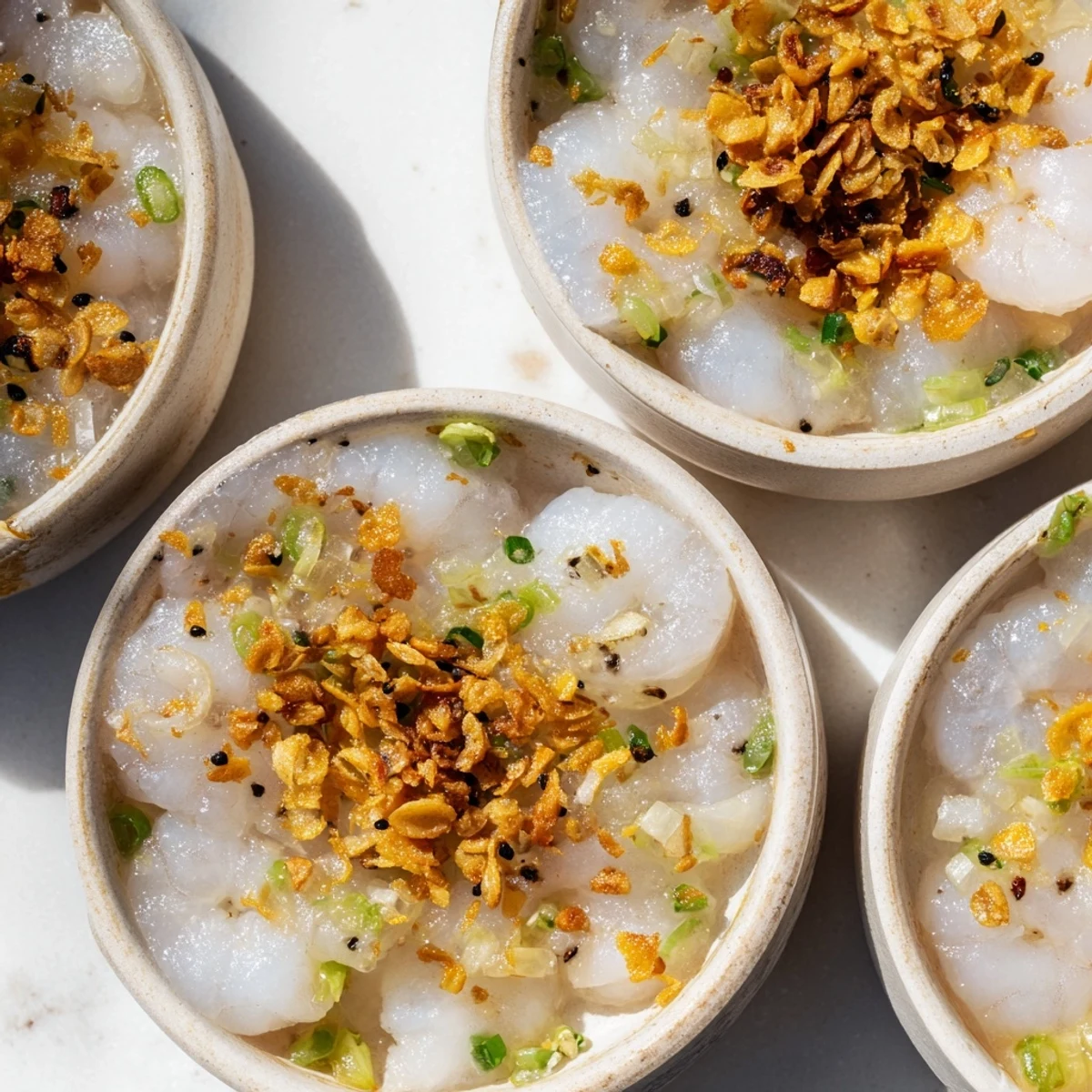
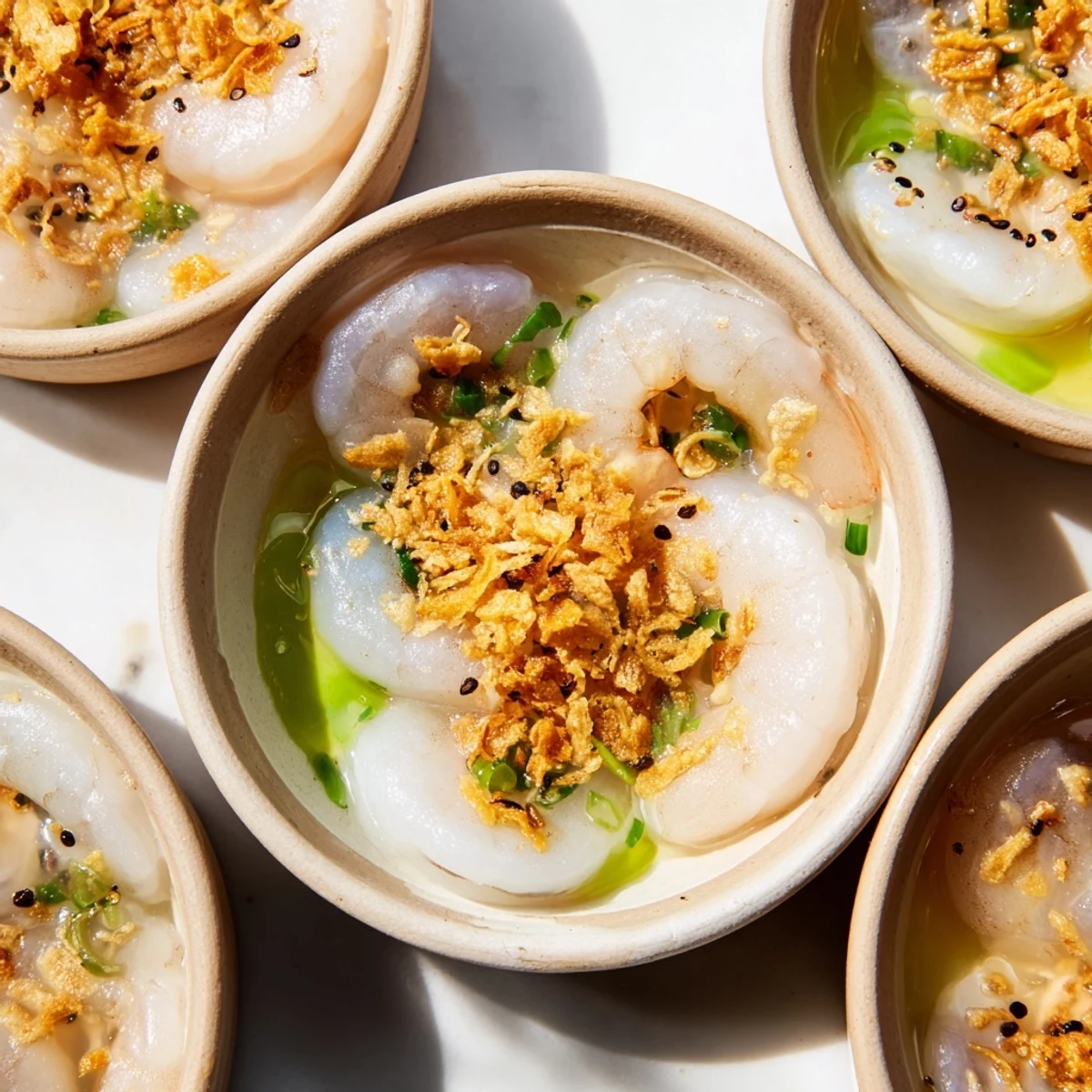
Save Banh Beo are delicate Vietnamese steamed rice cakes that offer a wonderful combination of textures and flavors. The base consists of a smooth, translucent rice flour batter that's steamed in small individual portions until set. Each cake is then topped with a savory mixture of chopped shrimp seasoned with aromatics, a fragrant scallion oil drizzle, and crispy fried shallots for crunch.
What makes these appetizers special is their balance—the soft, almost gelatinous rice cakes contrast beautifully with the savory, slightly chewy shrimp topping and the crisp shallots. They're typically served warm with a tangy fish sauce dipping seasoned with lime and chili.
The preparation involves making a simple batter, preparing the shrimp topping, creating aromatic scallion oil, and steaming in small dishes. While the process requires some attention to detail, especially when steaming individual portions, the result is an impressive appetizer that captures the essence of Vietnamese cuisine.
The first time I encountered banh beo was at my aunt's house in Da Nang, where she served these delicate steamed cakes on small ceramic plates arranged like flower petals across her dining table. What struck me wasn't just how beautiful they looked glistening under scallion oil, but how each tiny cake delivered such an intricate symphony of textures—silky soft rice, savory shrimp crunch, and that irresistible caramelized sweetness from fried shallots. Now whenever I make them, I'm transported back to that humid afternoon watching her steam dozens of these little discs with effortless grace.
Last spring, I made these for a dinner party when my friend Sarah mentioned she'd never tried Vietnamese food beyond pho. Watching her eyes light up at that first bite—the way the shrimp's savory depth met the bright lime dipping sauce—reminded me why I love sharing recipes that carry stories. She ended up standing beside me at the counter, learning to drizzle scallion oil in perfect spirals, turning my kitchen into a tiny workshop of steam and laughter.
Ingredients
- Rice flour: This forms the delicate foundation of banh beo, creating that signature translucent silkiness when steamed properly
- Tapioca starch: The secret ingredient that gives each cake its slight bounce and prevents them from becoming too dense or heavy
- Raw shrimp: Fresh peeled shrimp work best here, as they'll be finely chopped and cooked down into concentrated savory bits
- Fried shallots: These add an essential crunch and deep caramelized sweetness that contrasts beautifully with the soft rice cakes
- Scallion oil: Made by pouring hot oil over fresh scallions, this aromatic topping brings everything together with its vibrant green color and mild onion flavor
- Fish sauce: The backbone of Vietnamese cooking, providing that essential umami depth in the dipping sauce that ties all components together
Instructions
- Mix the rice cake batter:
- Whisk rice flour, tapioca starch, water, salt, and half teaspoon oil until completely smooth, then let it rest for ten minutes to allow the starches to hydrate fully.
- Prepare the shrimp topping:
- Finely chop the shrimp into small pieces, then sauté with chopped shallot in hot oil until fragrant before adding salt, sugar, and pepper and cooking until the shrimp is dry and concentrated in flavor.
- Make scallion oil:
- Heat two tablespoons oil until shimmering hot, then pour directly over finely sliced scallions in a heatproof bowl and let it steep while you prepare everything else.
- Steam the rice cakes:
- Lightly grease small heatproof dishes or ramekins, stir the rested batter, pour about two tablespoons into each dish, and steam for seven to eight minutes until each cake becomes translucent and set.
- Whisk together the dipping sauce:
- Combine fish sauce, sugar, lime juice, water, and sliced chili in a small bowl, stirring until the sugar completely dissolves into a balanced sweet and tangy sauce.
- Assemble your banh beo:
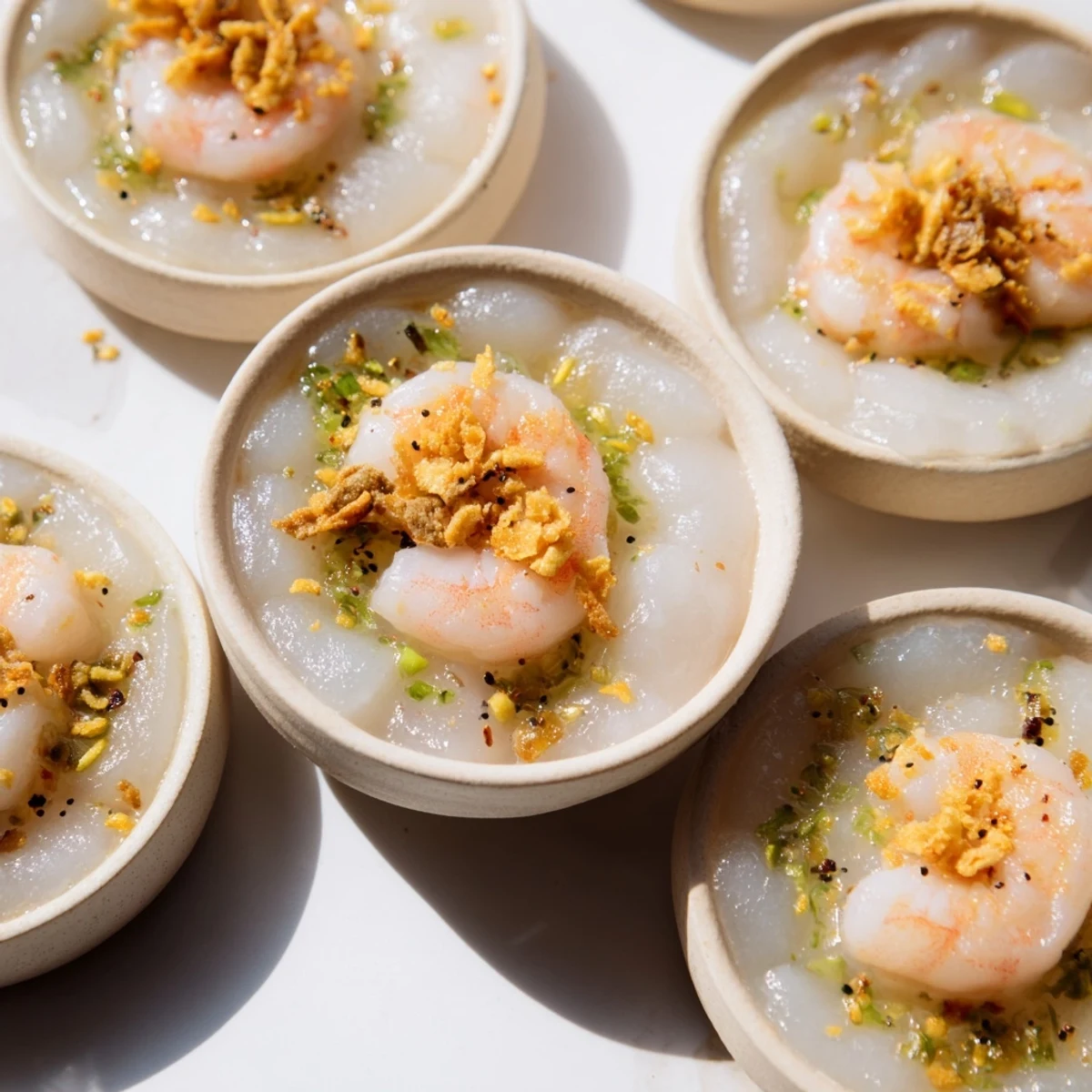
- Top each steamed rice cake with a small spoonful of shrimp mixture, a drizzle of scallion oil, a sprinkle of crispy shallots, and mung bean paste if you're using it.
 Save
Save These became my go-to comfort food during graduate school when I needed something that felt like home but didn't require hours over the stove. There's something deeply satisfying about dipping into that little bowl of nuoc cham, letting the tangy sauce soften the rice cake just enough before popping the whole thing into your mouth.
The Art of Steaming
Steaming these delicate rice cakes requires patience and attention. I've learned that the water should be at a steady boil before adding the dishes, and placing a clean kitchen towel under the lid prevents condensation from dripping onto the cakes and making them soggy. Each steamer batch takes seven to eight minutes, and it's worth checking one cake by gently pressing the center to confirm it's set throughout.
Perfecting Your Scallion Oil
The oil must be hot enough to slightly wilt and cook the scallions without burning them, which releases their aromatic oils into the fat. I test the temperature by dipping a wooden chopstick into the oil—when steady bubbles form around it, the oil is ready. Pour slowly in a circular motion over the scallions to ensure even coverage, then let it steep for at least five minutes before using.
Assembly Tips for Beautiful Results
Arranging the toppings is where banh beo becomes an art form. Place a small mound of shrimp slightly off-center rather than spreading it evenly, then drizzle scallion oil in a gentle spiral around it for that restaurant-style presentation. The crispy shallots should be the final touch, added just before serving so they retain their satisfying crunch.
- Work in small batches when assembling to keep the rice cakes warm
- Prepare all toppings before steaming so you can work quickly once the cakes are done
- Any leftovers can be refrigerated and gently reheated in the steamer the next day
 Save
Save There's something almost magical about how these tiny steamed cakes can transport you to busy Vietnamese street corners with just one bite. I hope they become part of your kitchen story too.
Recipe Questions & Answers
- → What does Banh Beo taste like?
-
Banh Beo features a delicate, neutral base from the rice flour that absorbs the savory toppings. The shrimp adds umami depth, scallion oil brings aromatic richness, and crispy shallots provide crunch. The dipping sauce adds tangy, sweet, and spicy notes that tie everything together.
- → Can I make Banh Beo ahead of time?
-
You can prepare the components ahead—the shrimp topping, scallion oil, and dipping sauce can be made a day in advance and refrigerated. However, the rice cakes are best freshly steamed. If you must make them ahead, steam them just before serving and reheat gently.
- → What dishes should I use for steaming?
-
Traditional Banh Beo uses small ceramic saucers or heatproof dishes about 3 inches in diameter. You can use ramekins, small Pyrex bowls, or even silicone muffin cups. The key is having something that creates the characteristic shallow, round shape and fits in your steamer.
- → Is there a vegetarian version?
-
Yes, you can easily make these vegetarian. Replace the shrimp topping with sautéed mushrooms (shiitake or oyster work well) seasoned similarly with salt, sugar, and pepper. Substitute the fish sauce in the dipping sauce with soy sauce or a vegetarian fish sauce alternative.
- → Why is my batter not translucent after steaming?
-
Translucency comes from proper steaming time and the tapioca starch in the batter. If your cakes are opaque, they may need another minute or two of steaming. The ratio of rice flour to tapioca starch is also important—too much rice flour can result in a denser, less translucent cake.
- → Can I freeze leftover Banh Beo?
-
Freezing is not recommended as the texture changes dramatically—the rice cakes become rubbery and lose their delicate quality. They're best enjoyed fresh. If you have leftovers, refrigerate and consume within 1-2 days, reheating gently by steaming for a few minutes.