
 Save
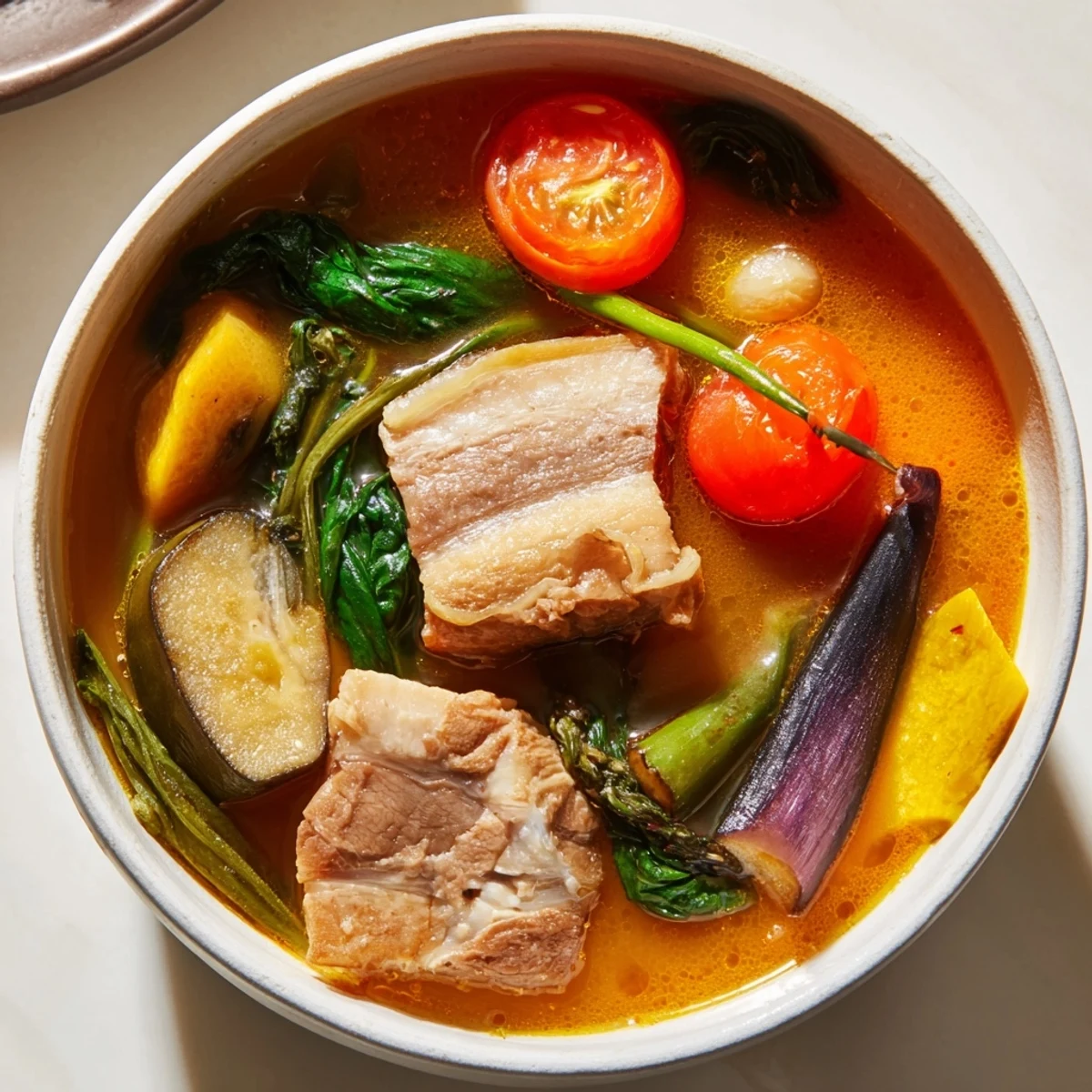
Save Sinigang brings together succulent pork chunks, crisp vegetables, and a distinctive sour broth that defines Filipino comfort cuisine. The tangy tamarind base creates an irresistible balance, while tender meat and fresh garden vegetables make each bowl satisfying and nourishing.
This one-pot masterpiece simmers pork belly or ribs until meltingly tender, then layers in daikon radish, eggplant, string beans, and leafy greens. The result is a harmonious bowl where sour, savory, and fresh flavors dance together perfectly over steaming white rice.
The first time I had Sinigang was at my lola's house during a particularly relentless typhoon season. Rain drummed against the tin roof while that impossible sour aroma filled her tiny kitchen, making everything feel safe and warm. I watched her drop vegetables into the bubbling pot with practiced hands, timing everything perfectly. That afternoon taught me that some soups don't just feed you, they anchor you.
Last winter, my partner came down with a terrible cold and refused to eat anything. I made a massive pot of Sinigang, something about that sour broth cutting through congestion. They sat up, took one sip, and actually smiled for the first time in days. Now whenever someone mentions feeling under the weather, I'm already reaching for the tamarind mix.
Ingredients
- 1 kg pork belly or pork ribs, cut into chunks: The fatty pieces render down into the broth, creating that rich mouthfeel that balances the sharp sourness, though beef, shrimp, or fish work beautifully too
- 2 medium tomatoes, quartered: These break down completely during simmering, contributing natural sweetness and body that mellows the tamarind
- 1 large onion, peeled and quartered: Don't chop it smaller, the big chunks become sweet and translucent without disappearing entirely
- 1 daikon radish, peeled and sliced: This absorbs the sour broth like a sponge, becoming these tender, refreshing bites throughout the soup
- 10 string beans, trimmed and cut into 2-inch pieces: They retain a satisfying crunch even after simmering, adding texture variation
- 1 eggplant, sliced: Use Asian eggplant if you can find it, they hold their shape better and turn buttery soft in the hot broth
- 2 cups spinach leaves or kangkong, washed: Add these at the very end so they stay vibrant and just wilted, not mushy and sad
- 2 long green chili peppers: Optional, but that gentle heat in the background makes everything else pop
- 1 packet tamarind soup base mix or 1 cup fresh tamarind pulp: This is the soul of the dish, fresh tamarind requires more work but yields a more nuanced, floral sourness
- 2 tbsp fish sauce: Essential for that depth of umami, add it gradually and taste as you go
- 1 tsp salt, or to taste: The tamarind mix already contains salt, so season carefully near the end
- ½ tsp freshly ground black pepper: Freshly cracked makes a noticeable difference in the final flavor
- 6 cups water: Start with less if you prefer a more concentrated broth, you can always add more
Instructions
- Get your pork started right:
- Bring 6 cups of water to a rolling boil in your largest pot, drop in the pork chunks, and keep watch for that gray foam rising to the top, skimming it off diligently for a cleaner tasting broth
- Build the aromatic foundation:
- Add those quartered tomatoes and onions to the pot, lower the heat to a gentle simmer, and let everything cook together for about 20 minutes until the pork is starting to yield to pressure
- Add the slower cooking vegetables:
- Drop in the daikon slices and give it another 10 minutes, they need that extra time to become tender and soak up all the developing flavors
- Bring in the remaining vegetables:
- Add the eggplant, string beans, and those green chilies if you're using them, letting the soup simmer for just 5 minutes so they stay vibrant and slightly firm
- Create that signature sour broth:
- Stir in the tamarind soup base until completely dissolved, or if using fresh pulp, mash it with some broth water and strain it back into the pot for that authentic cloudy richness
- Balance everything with seasonings:
- Add the fish sauce gradually, tasting after each splash, then season with salt and pepper until the broth hits that perfect sweet, sour, and salty harmony
- Finish with the tender greens:
- Drop in the spinach or kangkong leaves and turn off the heat after just 2 or 3 minutes, they should be barely wilted and still bright green
- Serve it like a true Filipino:
- Ladle the soup into deep bowls, making sure everyone gets plenty of vegetables and meat, and serve alongside steaming white rice to soak up that incredible broth
 Save
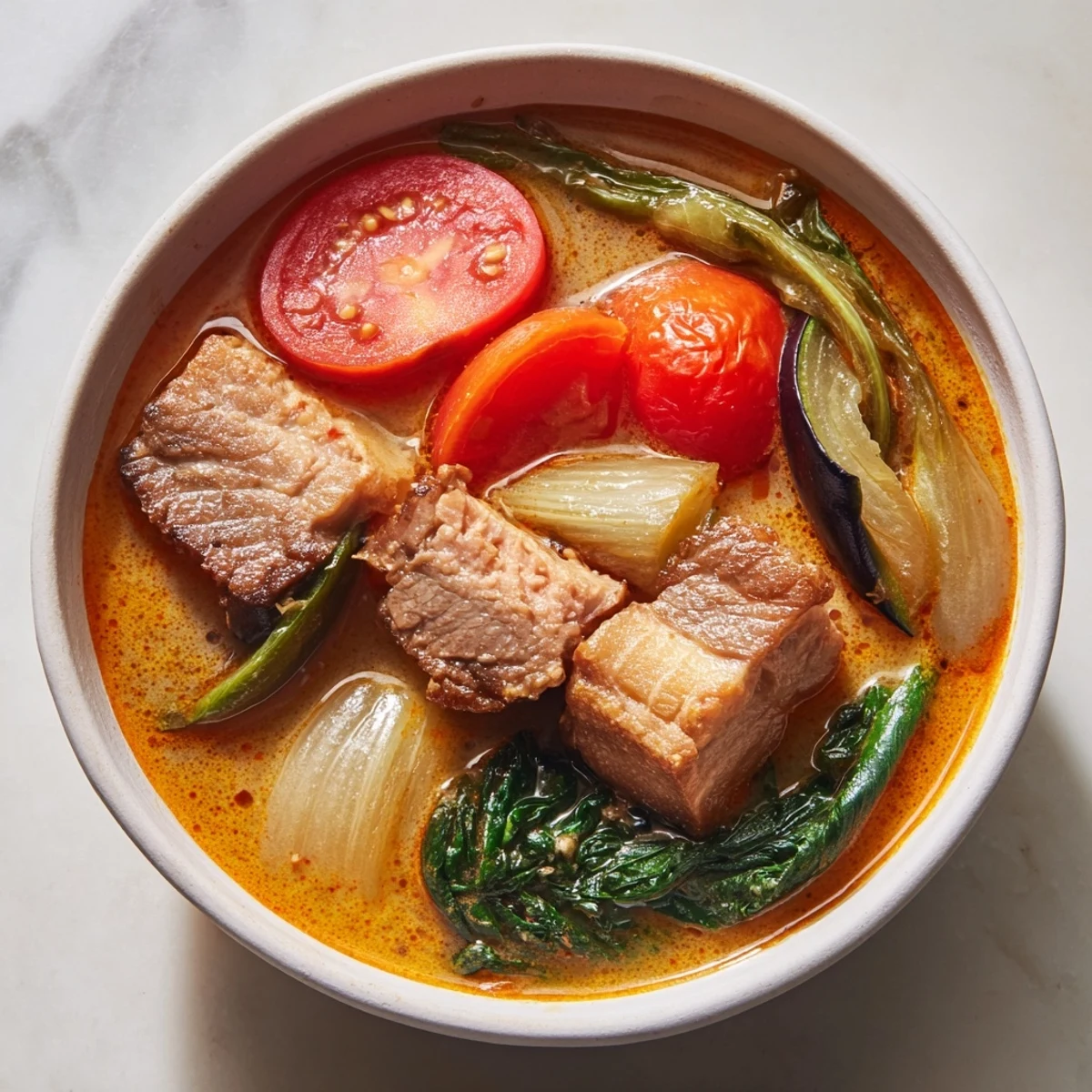
Save This soup has become my go-to for dinner parties because it sparks such interesting conversations. People who've never experienced Filipino food are always hesitant about that sour note, then pleasantly surprised when they take that first skeptical bite. Watching someone discover they love Sinigang has become one of my favorite kitchen moments.
Making It Your Own
The beauty of Sinigang lies in its adaptability to whatever you have on hand. I've made versions with salmon heads during a trip to coastal markets, and another memorable version using only vegetables from a struggling garden. Each variation tells a slightly different story while keeping that essential soul intact.
Getting The Sour Balance Right
Finding your perfect sourness level is a personal journey that takes some practice. My Filipino friends disagree on whether Sinigang should make your mouth pucker violently or just gently tingle, and I've learned there's no wrong answer. Start with less tamarind than you think you need, you can always add more but you can't take it back.
Perfect Pairings And Sides
While steamed rice is traditional, I've discovered this soup pairs surprisingly well with crusty bread for soaking up every last drop. The contrast between that hot, sour broth and cold beer on a humid afternoon has become one of my simple pleasures in life.
- Fried fish on the side makes for a incredibly satisfying meal, the crispy skin against the soupy broth is magical
- A simple salad of cucumber and vinegar helps refresh your palate between bowls
- Save any leftover broth and use it as a cooking liquid for rice the next day, you will thank yourself
 Save
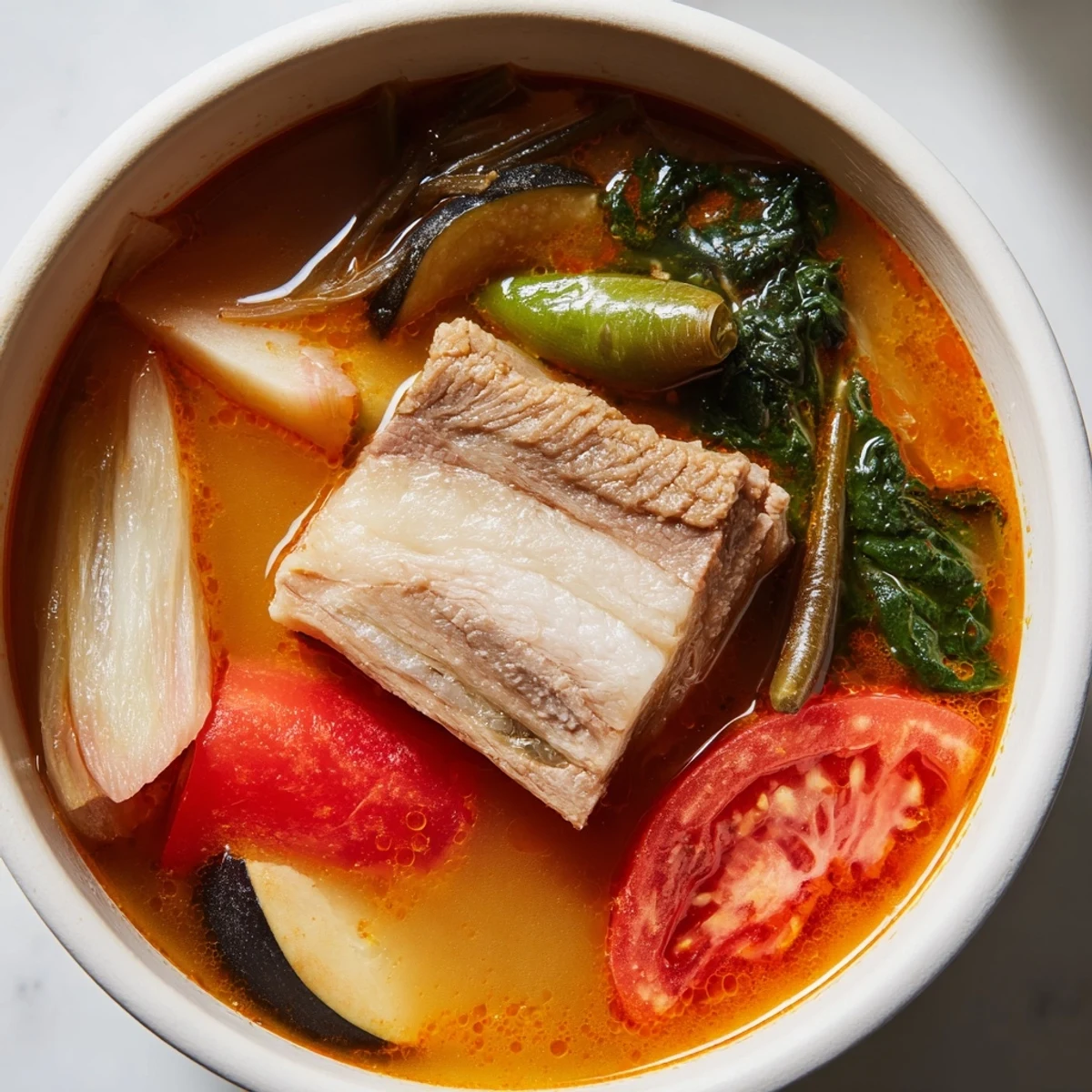
Save There's something deeply honest about a soup that makes your face pucker while simultaneously comforting your soul. This recipe has taught me that the best dishes balance opposing forces, creating something greater than the sum of their parts.
Recipe Questions & Answers
- → What makes Sinigang sour?
-
The signature tanginess comes from tamarind, either using fresh tamarind pulp boiled and strained into the broth, or convenient tamarind soup base mix. This natural sour agent creates Sinigang's distinctive flavor profile.
- → Can I use other proteins besides pork?
-
Absolutely. While pork belly or ribs are traditional, Sinigang works beautifully with beef, shrimp, or fish. When using seafood, add during the last 10 minutes of cooking to prevent overcooking and maintain delicate texture.
- → What vegetables go best in Sinigang?
-
Classic additions include daikon radish, eggplant, string beans, tomatoes, onions, and leafy greens like spinach or kangkong. You can also incorporate okra or taro based on personal preference and seasonal availability.
- → How do I adjust the sourness level?
-
Start with the recommended tamarind amount, then taste your broth. For more tang, add additional tamarind mix or pulp gradually. If too sour, balance with a pinch more salt or a small amount of sugar.
- → What should I serve with Sinigang?
-
Steaming hot white rice is the essential accompaniment, perfect for soaking up the flavorful broth. A chilled glass of Sauvignon Blanc complements the tangy notes beautifully. Many also enjoy it with crispy fried fish on the side.
- → How long does Sinigang keep in the refrigerator?
-
Properly stored in an airtight container, Sinigang keeps well for 3-4 days refrigerated. The flavors often develop and improve overnight. Reheat gently on the stove, adding a splash of water if the broth has reduced.