
 Save
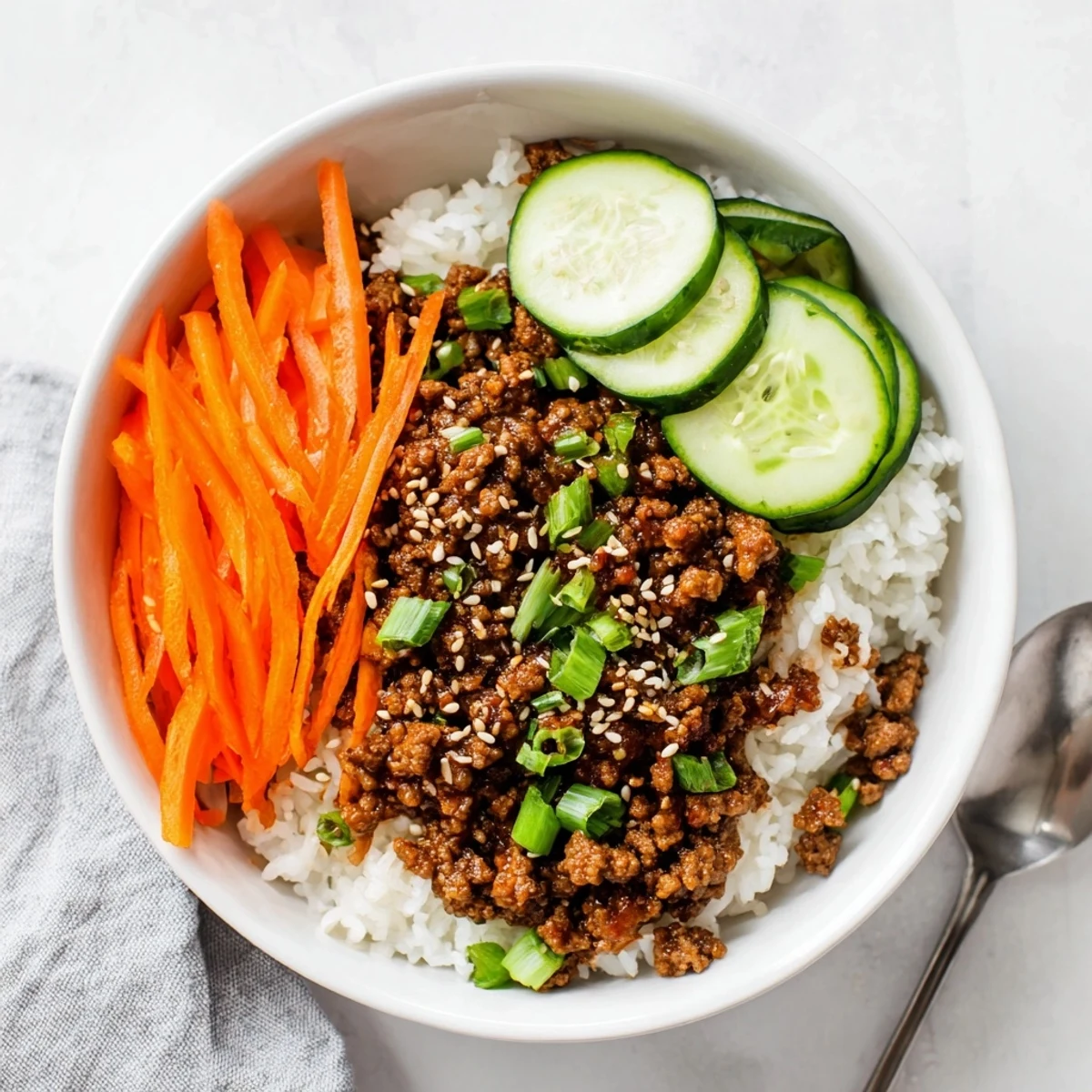
Save These Korean-inspired beef bowls combine lean ground beef with a savory-sweet sauce featuring soy sauce, brown sugar, sesame oil, garlic, ginger, and gochujang. The beef cooks quickly in a skillet while rice steams, then everything gets assembled into bowls with crisp julienned carrots, cucumber slices, scallions, and toasted sesame seeds. The dish comes together in just 25 minutes, making it perfect for busy weeknights when you want something satisfying but don't want to spend hours in the kitchen.
My roommate in college introduced me to the magic of Korean beef bowls during exam week when we both needed something fast but actually comforting to eat. The way the spicy-sweet sauce clings to every grain of rice still makes my stomach growl thinking about it. I've since learned that the real trick is letting the sauce reduce just enough so it coats the beef like a glaze rather than sitting as a puddle at the bottom of the bowl.
Last Tuesday my partner came home exhausted from work and I had these bowls ready in the time it took to change out of work clothes. Watching them take that first bite and immediately relax shoulders that had been hunched up all day reminded me why I keep this recipe in my back pocket. The vegetables add such a fresh crunch that balances the rich beef perfectly.
Ingredients
- 500 g lean ground beef: Ground beef browned and coated in sauce creates the perfect savory base that soaks into the rice below
- 60 ml low-sodium soy sauce: Starting with low-sodium lets you control the salt level since the sauce reduces down
- 2 tbsp light brown sugar: This mellows the salty soy sauce and helps create that sticky glaze texture
- 1 tbsp sesame oil: Toasted sesame oil adds that unmistakable nutty aroma that screams Korean flavors
- 4 garlic cloves minced: Fresh garlic punches through the rich beef and wakes up the whole dish
- 1 tbsp freshly grated ginger: Ginger adds warmth and depth that you cannot get from dried powder
- 1 tbsp gochujang: This Korean chili paste brings gentle heat and a subtle fermented sweetness
- 2 tsp rice vinegar: A splash of vinegar cuts through the richness and brightens everything
- 300 g jasmine rice: Jasmine rice has a natural floral sweetness that pairs beautifully with Korean flavors
- 2 medium carrots julienned: Fresh carrots stay crisp and add sweetness that balances the spicy beef
- 1 small cucumber thinly sliced: Cool cucumber provides relief from the heat and adds refreshing crunch
- 4 scallions thinly sliced: Fresh scallion adds a mild onion bite and bright pop of green color
- 2 tbsp toasted sesame seeds: These tiny seeds add nutty flavor and satisfying texture throughout the bowl
Instructions
- Get the rice going first:
- Rinse your rice until the water runs clear then combine it with 480 ml water in a saucepan. Bring it to a boil reduce heat to low cover and let it simmer for 12 to 15 minutes until all the water is absorbed. Fluff it gently with a fork when it is done.
- Whisk up the sauce:
- In a small bowl combine the soy sauce brown sugar sesame oil garlic ginger gochujang and rice vinegar. Whisk until the sugar is completely dissolved and the mixture is smooth.
- Brown the beef:
- Heat a large skillet over medium-high heat then add the ground beef. Break it up with your spatula and cook for about 5 minutes until it is fully browned. Drain off any excess fat if there is a lot pooling in the pan.
- Add the sauce:
- Pour your sauce mixture over the browned beef and stir to coat everything evenly. Let it cook for another 2 to 3 minutes stirring constantly until the sauce thickens slightly and clings to the beef.
- Build your bowls:
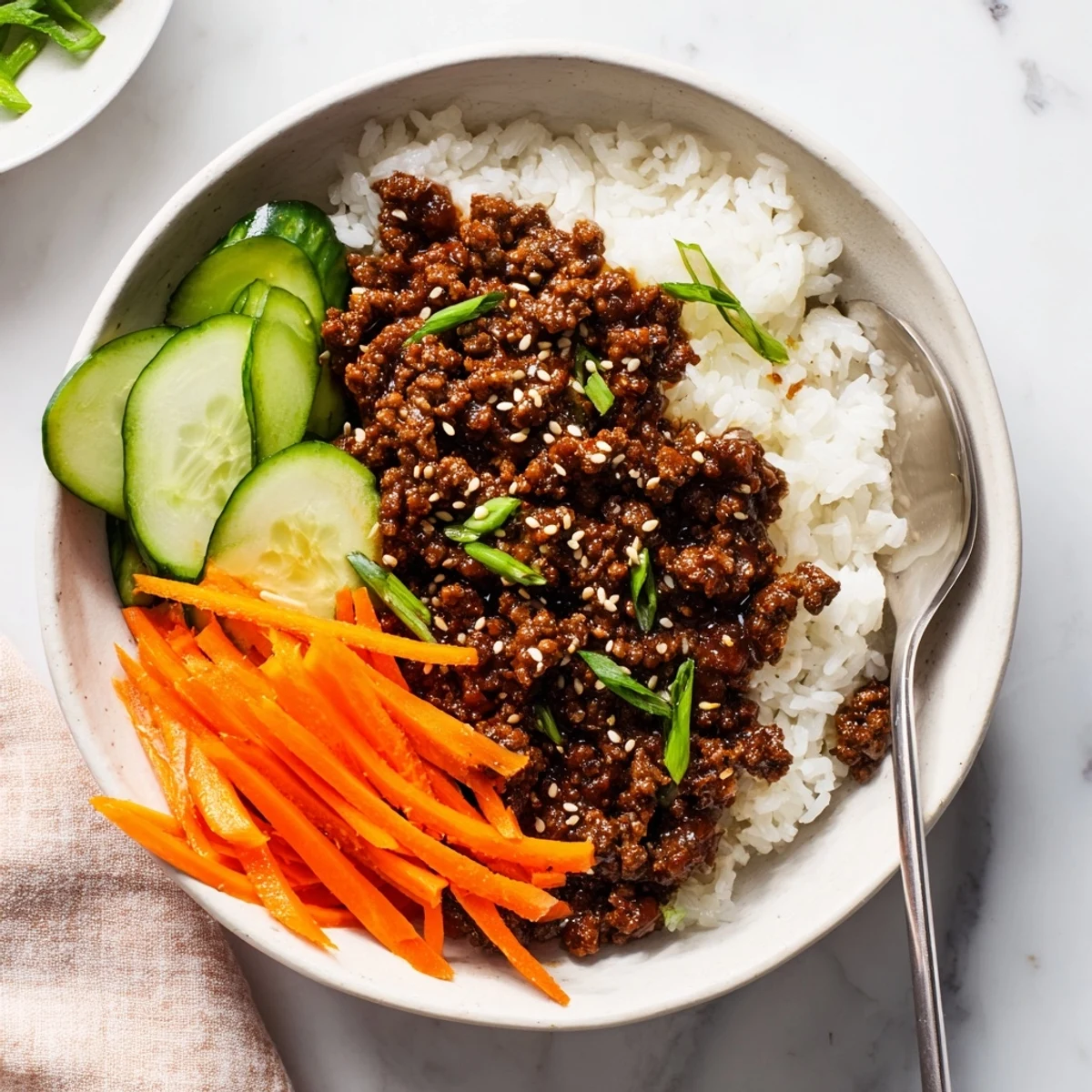
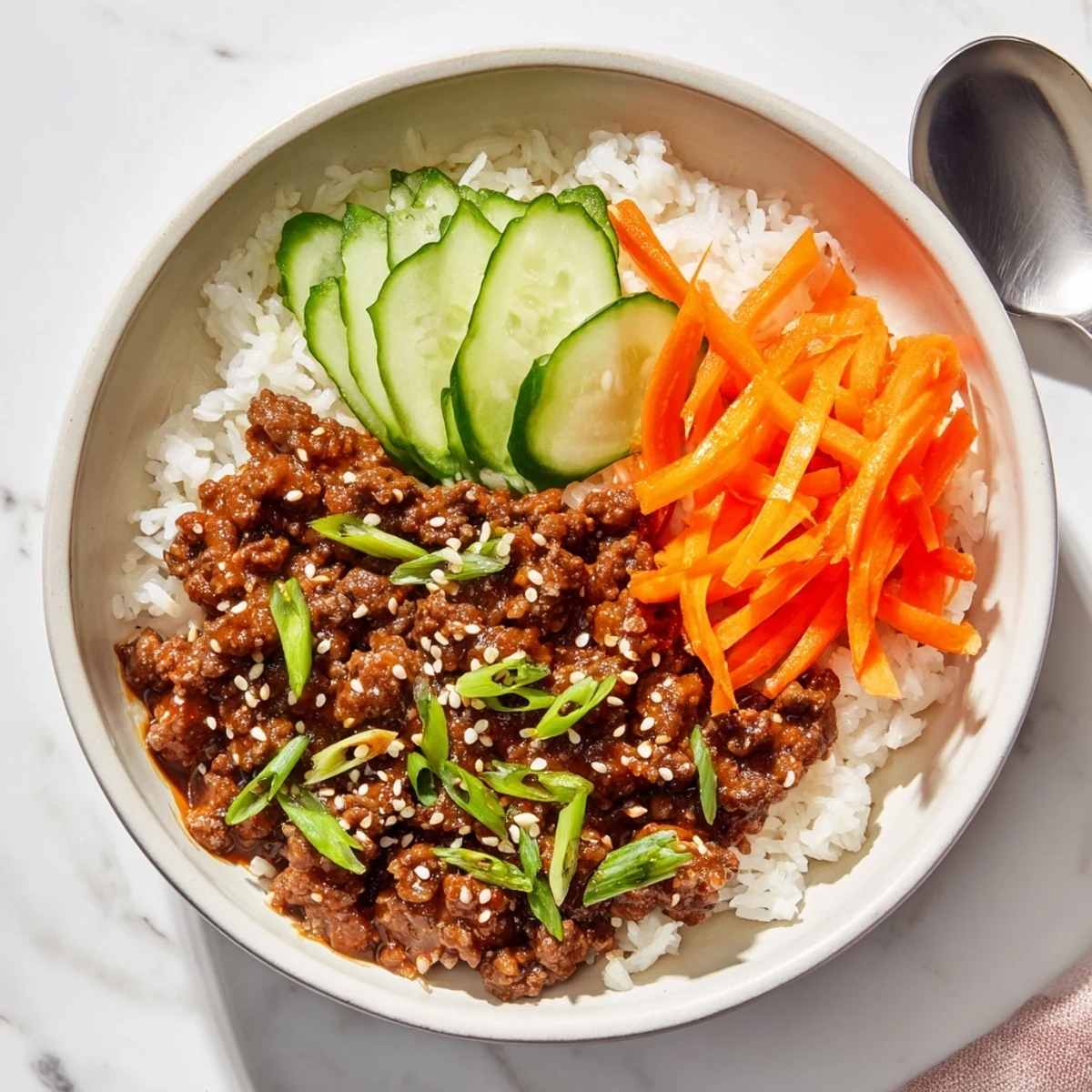
- Divide the steamed rice among four bowls then top each with a generous portion of the saucy beef. Arrange the carrots cucumber scallions and sesame seeds on top and add kimchi or cilantro if you are using them.
 Save
Save These Korean beef bowls have become my go-to when friends text that they are stopping by unexpectedly. The first time I served them at a dinner party everyone was too busy eating to talk for the first five minutes which I consider the highest compliment possible.
Make It Your Own
Ground turkey or chicken work beautifully if you want something lighter and they absorb the sauce just as well. For a vegetarian version crumble extra firm tofu and fry it until golden before adding the sauce.
Prep Ahead Strategy
You can julenned the carrots and slice the cucumber up to two days in advance and keep them in sealed containers in the refrigerator. The sauce can be whisked together and stored in a jar for up to a week making the actual cooking time even shorter.
Serving Suggestions
A cold glass of Riesling cuts through the spice beautifully or go with green tea if you want to keep it non-alcoholic. I like to serve extra kimchi on the side for anyone who wants to turn up the heat.
- Warm your bowls before serving so the rice stays hot longer
- Squeeze fresh lime over the top right before eating for extra brightness
- Fried eggs with runny yolks make these bowls even more decadent
 Save
Save There is something deeply satisfying about a meal that comes together this quickly yet tastes like it simmered all day. These bowls have saved more weeknights than I can count.
Recipe Questions & Answers
- → Can I make these beef bowls spicy?
-
Yes, adjust the heat level by adding more gochujang or red pepper flakes to the sauce mixture. Start with a small amount and taste as you go.
- → What other proteins work well in this dish?
-
Ground turkey, chicken, or even crumbled tofu make excellent substitutes for the beef while still absorbing all the delicious Korean-style flavors.
- → Can I prepare components ahead of time?
-
The sauce can be whisked together and stored in the refrigerator for up to a week. Vegetables can be sliced a day in advance, though they're best when freshly cut.
- → Is there a gluten-free option?
-
Simply substitute tamari for the soy sauce and ensure your gochujang is certified gluten-free to make the entire dish gluten-free.
- → What rice variety works best?
-
Short-grain white rice or jasmine rice both provide the perfect fluffy texture to soak up the flavorful sauce. Brown rice works too with adjusted cooking time.